We Go Fast,You Go Forward

Accelerate in vivo CAR-T development with custom IVT mRNA, targeted LNP formulation, antibody conjugation, stability optimization, and scalable CRO solutions.
Discover more >
Learn how 5′ UTR engineering can optimize mRNA translation in T cells, reduce tonic signaling, and improve CAR-T cell therapy performance.
Discover more >
Learn how next-generation sequencing (NGS) works step by step, from sample preparation and library preparation to sequencing, FASTQ data, bioinformatics, and biological interpretation.
Discover more >
Learn about LNP formulation and mRNA encapsulation, including lipid selection, payload scale, QC, particle size, encapsulation efficiency, and service options.
Discover more >
Learn what next-generation sequencing (NGS) is, how NGS works, common applications, NGS vs. Sanger, sequencing strategies, and how to plan an NGS project.
Discover more >
Explore custom IVT mRNA synthesis, including workflow, service grades, purification, capping, modified nucleotides, Poly(A) tails, QC and project timelines.
Discover more >
Learn how to choose the right DNA sequencing service based on your research goals, read length, accuracy, turnaround time, cost, and data requirements. Compare Sanger, NGS, and Nanopore sequencing.
Discover more >
Whole plasmid sequencing, powered by Nanopore Technology. Complete end-to-end plasmid validation, beyond sanger & short-read NGS
Discover more >
From intelligent molecular design to experimental validation, AI is reshaping how the next generation of antibody therapeutics is discovered, optimized, and developed.
Discover more >
Golden Gate Cloning has become one of the most powerful molecular biology techniques for synthetic biology, plasmid construction, metabolic engineering, and CRISPR applications. By leveraging the unique properties of Type IIS restriction enzymes, researchers can assemble multiple DNA fragments in a single reaction with remarkable efficiency and accuracy.
Discover more >
We Go Fast, You Go Forward
 sales.us@quintarabio.com
 1-617-789-6111
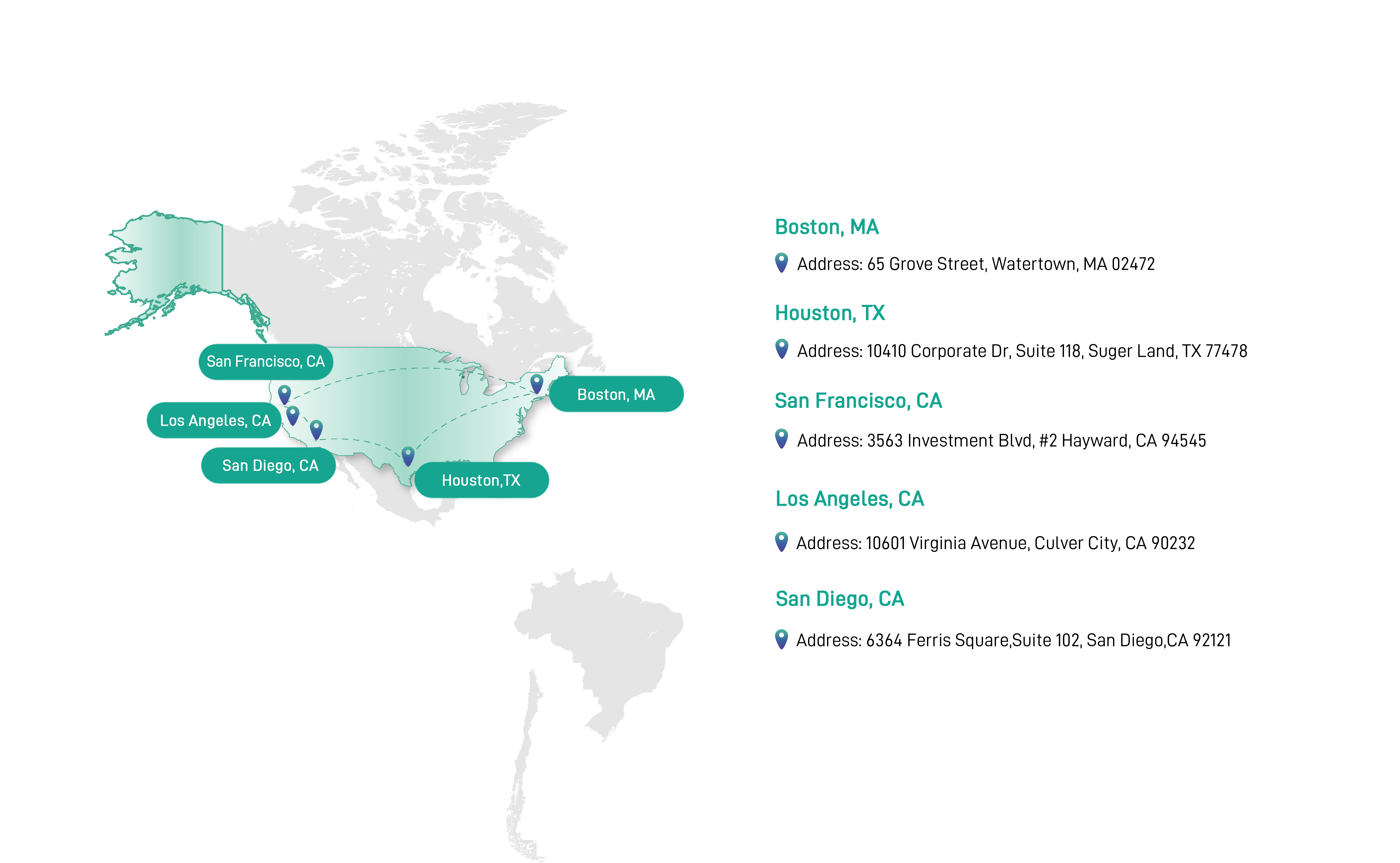
 3563 Investment Blvd, #2, Hayward, CA 94545sales.us@quintarabio.com1-617-789-611165 Grove St, Suite 102, Watertown, MA 02472sales.us@quintarabio.com1-617-789-611110410 Corporate Dr. Suite 118, Sugar Land, TX 77478
sales.us@quintarabio.com
1-424-549-091110601 Virginia Avenue, Culver City, CA 90232sales.us@quintarabio.com1-619-823-08956364 Ferris Square, Suite 102, San Diego, CA 92121Quintara Biosciences © 2025 All Rights Reserved | Site Map | Terms of Use | Privacy Policy


 Login
Login  Order
Order Contact Us
 Contact Us