We Go Fast,You Go Forward

Learn how to choose the right DNA sequencing service based on your research goals, read length, accuracy, turnaround time, cost, and data requirements. Compare Sanger, NGS, and Nanopore sequencing.
Discover more >
Whole plasmid sequencing, powered by Nanopore Technology. Complete end-to-end plasmid validation, beyond sanger & short-read NGS
Discover more >
CRISPR gene editing has become a cornerstone technology in modern life science research, enabling precise modifications in genomes across a wide range of organisms. However, successful gene editing does not end with the editing step itself. Researchers must verify whether the intended edit has occurred accurately and efficiently. This makes CRISPR validation a critical component of every genome editing workflow.
Discover more >
Next-generation sequencing (NGS) has revolutionized biological research and clinical diagnostics over the past two decades. Today, two dominant technologies define the field: Illumina's short-read sequencing and Oxford Nanopore long-read sequencing. Understanding their fundamental differences helps researchers select the optimal platform for their specific needs.
Discover more >
The paradigm of genomics is shifting. For decades, researchers have relied on traditional short-read platforms to decode genetic information. However, as molecular biology, synthetic biology, and clinical research continue to advance, scientists increasingly encounter complex genomic structures that demand higher-resolution approaches.
Discover more >
Nanopore sequencing has emerged as one of the most transformative technologies in modern genomics. By passing individual DNA or RNA molecules through tiny protein pores and measuring disruptions in electrical current, it delivers long reads in real time without the need for fluorescent labels or extensive amplification. Developed by Oxford Nanopore Technologies, this platform stands out for its portability, speed, and ability to sequence native molecules directly. At Quintara Bio, we leverage the latest nanopore chemistry to offer fast, reliable sequencing services tailored to researchers, clinicians, and biotech teams across the United States.
Discover more >
Nanopore sequencing stands as one of the most elegant and disruptive innovations in genomics. Rather than relying on chemical reactions or light to read DNA, it listens to the subtle electrical whispers of individual molecules as they thread through a tiny protein pore. This third-generation technology delivers real-time, long-read data that has transformed everything from plasmid verification to complex genome assembly.
Discover more >
We Go Fast, You Go Forward
 sales.us@quintarabio.com
 1-617-789-6111
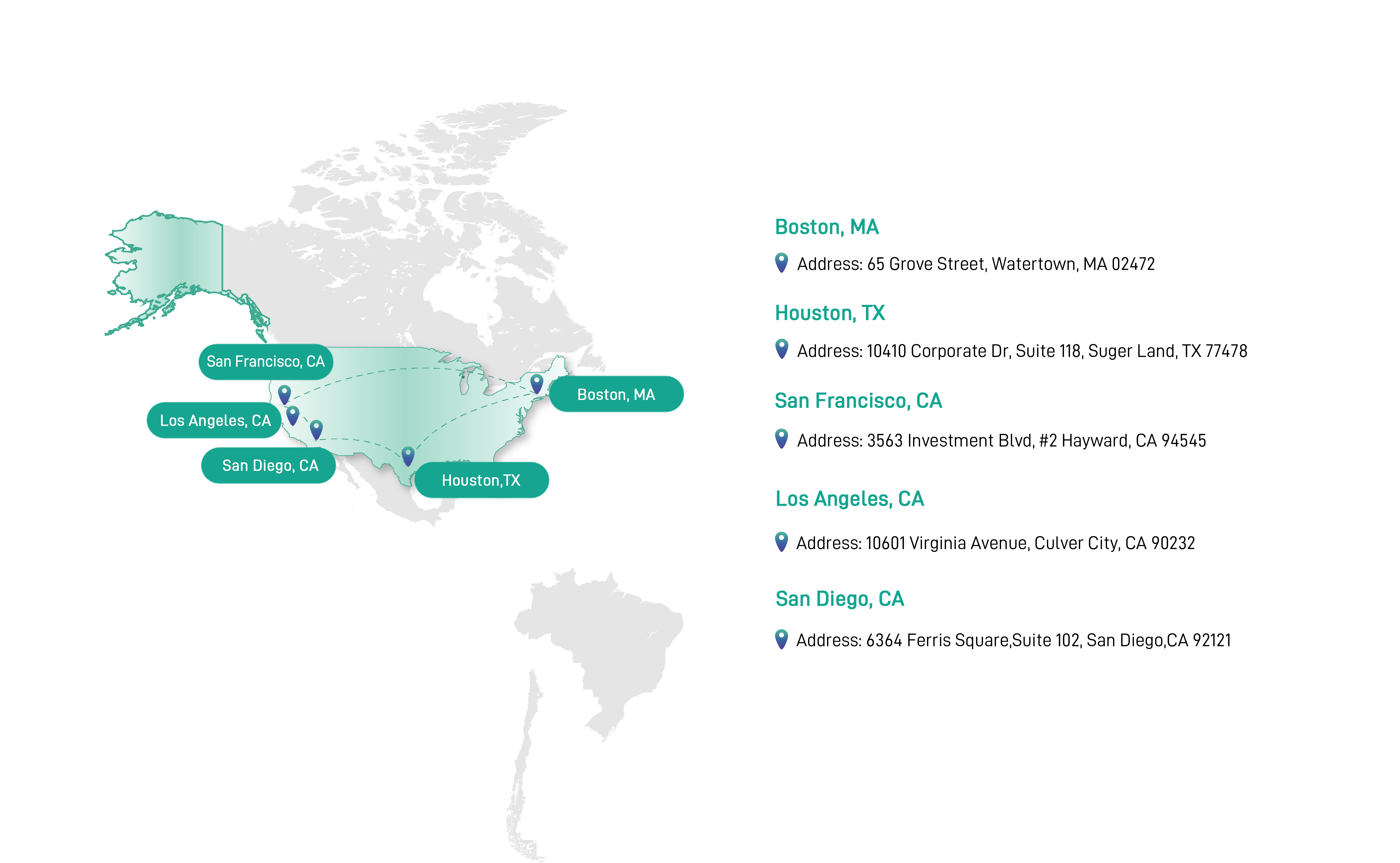
 3563 Investment Blvd, #2, Hayward, CA 94545sales.us@quintarabio.com1-617-789-611165 Grove St, Suite 102, Watertown, MA 02472sales.us@quintarabio.com1-617-789-611110410 Corporate Dr. Suite 118, Sugar Land, TX 77478
sales.us@quintarabio.com
1-424-549-091110601 Virginia Avenue, Culver City, CA 90232sales.us@quintarabio.com1-619-823-08956364 Ferris Square, Suite 102, San Diego, CA 92121Quintara Biosciences © 2025 All Rights Reserved | Site Map | Terms of Use | Privacy Policy


 Login
Login  Order
Order Contact Us
 Contact Us