We Go Fast,You Go Forward
July 19, 2026
CRISPR gene editing has become a cornerstone technology in modern life science research, enabling precise modifications in genomes across a wide range of organisms. However, successful gene editing does not end with the editing step itself. Researchers must verify whether the intended edit has occurred accurately and efficiently. This makes CRISPR validation a critical component of every genome editing workflow.
Traditionally, Sanger sequencing has been the gold standard for validating CRISPR edits. While highly accurate for simple edits, Sanger sequencing faces limitations when analyzing mixed populations, large insertions/deletions (indels), or multiple editing events. Recent advances in nanopore sequencing provide researchers with a faster, more comprehensive alternative for CRISPR validation.
In this article, we compare Sanger and nanopore sequencing across three critical factors: cost, accuracy, and turnaround time, helping researchers choose the right technology for their CRISPR projects.
After performing CRISPR editing, researchers need to answer several key questions:
Did the intended edit occur?
What is the editing efficiency?
Are there unintended mutations?
Are there multiple alleles present?
Did large insertions, deletions, or structural changes occur?
The choice of validation method directly impacts the speed, confidence, and cost of obtaining these answers.
Sanger sequencing determines DNA sequence by chain termination chemistry and generates a chromatogram representing the sequence of a PCR-amplified region.
✓ High per-base accuracy (>99.9%)
✓ Widely available and familiar to researchers
✓ Easy analysis for single-clone validation
✓ Low cost for a small number of samples
✗ Limited read length (~700–1,000 bp)
✗ Difficult to interpret mixed populations
✗ Poor detection of large indels
✗ Cannot accurately quantify editing frequencies
✗ Often requires cloning or colony picking for complex edits
Nanopore sequencing reads individual DNA molecules directly by measuring electrical current changes as DNA passes through nanopores. This generates long reads that can span entire edited regions.
✓ Long-read sequencing (Up to 10–30 kb average, optimized projects can reach 4 Mb ultra-long reads)
✓ Detects large insertions, deletions, and rearrangements
✓ Direct quantification of editing outcomes
✓ Resolves mixed populations and mosaic edits
✓ High sample multiplexing capability
✓ Rapid sequencing and analysis
✗ Historically lower raw-read accuracy than Sanger (modern R10.4.1 chemistry and duplex sequencing achieve >99.9% consensus accuracy (Q30+), matching Sanger performance)
✗ Requires bioinformatics analysis
✗ May be excessive for simple single-clone confirmation
However, modern nanopore chemistries and consensus analysis have significantly improved accuracy, making the technology increasingly suitable for validation applications.
For labs working with a small number of pure clonal samples (e.g., validating 1–10 edited clones after initial screening), Sanger sequencing offers a straightforward, low-overhead solution. It requires no specialized library prep or multiplexing setup, making it a simple choice for quick confirmations where you only need to verify short, single-fragment edits.
As your CRISPR work scales up—whether you’re screening dozens of gRNA candidates, analyzing pooled cell populations, or validating complex edits across many samples—Nanopore sequencing delivers unmatched efficiency gains:
High multiplexing: Pool dozens to hundreds of CRISPR amplicons in a single run, eliminating the need for separate reactions per sample.
Minimal pre-processing: Compatible with crude PCR products, bacterial cultures, and colonies, cutting down on purification and hands-on labor.
One-pass full-length validation: A single read covers entire edited regions (up to 25 kb), so you avoid the cost and time of designing multiple primers or re-sequencing failed reactions.
For medium-to-large CRISPR screening projects, these efficiencies translate directly to faster turnaround times, fewer manual steps, and a much more scalable workflow overall.
Workflow Scale | Recommended Platform | Key Benefit for Your Lab |
Small (1–10 clones, short fragments) | Sanger | Simple, no setup overhead for quick confirmations |
Medium (20–100 samples, pooled/knock-in edits) | Nanopore | Multiplexing and full-length reads streamline validation |
Large (100+ samples, high-throughput screening) | Nanopore | Scalable, automated workflows to keep projects on track |
Winner: Nanopore for medium-to-large CRISPR screening projects.
Sanger sequencing delivers exceptional single-read accuracy and remains ideal for:
Single-clone validation
Small SNP confirmation
Simple knock-in verification
However, chromatograms become difficult to interpret when multiple alleles coexist.
Modern nanopore platforms achieve very high consensus accuracy through:
Improved pore chemistry
Duplex sequencing
High-depth consensus calling
For CRISPR validation, nanopore offers additional advantages:
Accurate editing frequency measurements
Detection of rare variants
Identification of complex repair outcomes
Structural variant detection
Suppose researchers create a CRISPR knockout and obtain:
Wild-type alleles
5 bp deletion
12 bp deletion
30 bp insertion
Sanger sequencing often generates overlapping chromatograms that require deconvolution software and still may not fully resolve the editing outcomes.
Nanopore sequencing directly reads each individual molecule, allowing researchers to determine the exact proportion of each editing event.
Winner: Sanger for simple single-clone verification; nanopore for comprehensive editing analysis.
1. PCR amplification
2. Sample purification
3. Submission to sequencing facility
4. Sequencing reaction
5. Data return
6. Analysis
Typical turnaround: 1–3 business days. Additional cloning steps can extend timelines to a week or more.
1. PCR amplification
2. Library preparation
3. Sequencing
4. Automated analysis
Many service providers can deliver results within: 24 hours or less. For amplicon-based CRISPR validation, overnight turnaround is increasingly common.
Fast validation enables researchers to:
Quickly identify successful edits
Advance positive clones sooner
Reduce cell culture costs
Accelerate project timelines
Winner: Nanopore.
Sanger sequencing remains an excellent choice when:
Validating a small number of clones
Confirming simple SNPs or small edits
Working with limited budgets
No need for quantitative editing analysis
Single-cell clone confirmation
Routine plasmid verification
Simple gene editing projects
Nanopore sequencing is the preferred option when:
Screening dozens or hundreds of edited samples
Measuring editing efficiency
Detecting large insertions or deletions
Characterizing HDR outcomes
Studying mosaic populations
Investigating off-target structural changes
CRISPR knockout screening
Knock-in validation
Prime editing analysis
Base editing studies
Cell pool characterization
High-throughput genome engineering projects
Feature | Sanger Sequencing | Nanopore Sequencing |
Read Length | Up to ~700–1,000 bp | Up to 10–30 kb average |
Single-Clone Accuracy | Excellent | Excellent (consensus, >99.9% Q30+) |
Mixed Population Analysis | Limited | Excellent |
Large Indel Detection | Poor | Excellent |
Quantitative Editing Analysis | Limited | Excellent |
Scalability | Low | High |
Turnaround Time | 1–3 days | Same day to 24 hours |
Cost for Large Projects | High | Lower |
Structural Variant Detection | No | Yes |
Basic CRISPR Knockout (Cell Clones, Short Fragments <1 kb): Sanger Sequencing (cost-effective, fast for single clones).
High-Throughput gRNA Screening / Pooled Cell Editing: Nanopore AmpValue (barcoding + overnight delivery, use promo code AmpValue5Free for 5 free samples).
CRISPR Knock-in / AAV Viral Vector Editing: Nanopore full-length amplicon sequencing + Sanger junction verification (hybrid workflow).
Transgenic Mosaic Animals / Mixed Populations: Nanopore (single-molecule allele deconvolution).
Therapeutic CRISPR (Safety Validation for SVs): Nanopore deep sequencing (AmpPro) + Sanger spot check (publication/regulatory compliance).
As a full-platform sequencing CRO integrating Sanger, NGS, and Nanopore, we focus on optimizing solutions for CRISPR gene editing research, with the following core strengths:
1. Full-scenario coverage: From routine clonal screening (AmpValue) to deep complex variation detection (AmpPro), matching all CRISPR validation needs;
2. Ultra-fast turnaround: Overnight delivery for most samples, same-day service in specific regions, supporting rapid experimental iteration;
3. Low sample requirements: Compatible with various crude samples to simplify your pre-experimental operations;
4. Professional data deliverables: Complete FASTA, GenBank, variant analysis reports, and interactive QC tools, directly supporting journal submissions and project summaries.
5 free AmpValue Nanopore sequencing samples (code: AmpValue5Free);
Amplicon purification service at $1 per sample (code: Cleanup1).
We provide one-stop Sanger + Nanopore + Illumina hybrid CRISPR validation services:
Nanopore Amplicon Sequencing (Amp Series): $4.99–$30/sample, overnight results, supports 200 bp–25 kb amplicons; compatible with unpurified PCR products, cell cultures, and colonies. Amplicon cleanup service: $1/sample (code: Cleanup1).
Whole Plasmid Sequencing (WPS Series): For CRISPR plasmid/gRNA vector verification (up to 25 kb).
Hybrid Validation Packages: Combine Nanopore long-read structure analysis and Sanger high-accuracy site confirmation for publication and preclinical projects.
Sanger sequencing has served as the gold standard for CRISPR validation for decades and remains highly effective for simple clone verification. However, as CRISPR experiments become more complex and higher throughput, researchers increasingly require deeper insights into editing outcomes.
Nanopore sequencing offers significant advantages in speed, scalability, and comprehensive edit characterization, enabling researchers to detect complex indels, quantify editing efficiency, and validate large genomic changes in a single assay.
For small-scale validation, Sanger remains a practical solution. For modern CRISPR workflows involving pooled edits, knock-ins, or large-scale screening, nanopore sequencing is rapidly becoming the preferred validation technology.
Bottom Line: If your goal is simply to confirm a single edit, Sanger sequencing remains reliable and cost-effective. If you need a complete picture of CRISPR editing outcomes—with faster turnaround and lower costs at scale—nanopore sequencing is the superior choice.

We Go Fast, You Go Forward
 sales.us@quintarabio.com
 1-617-789-6111
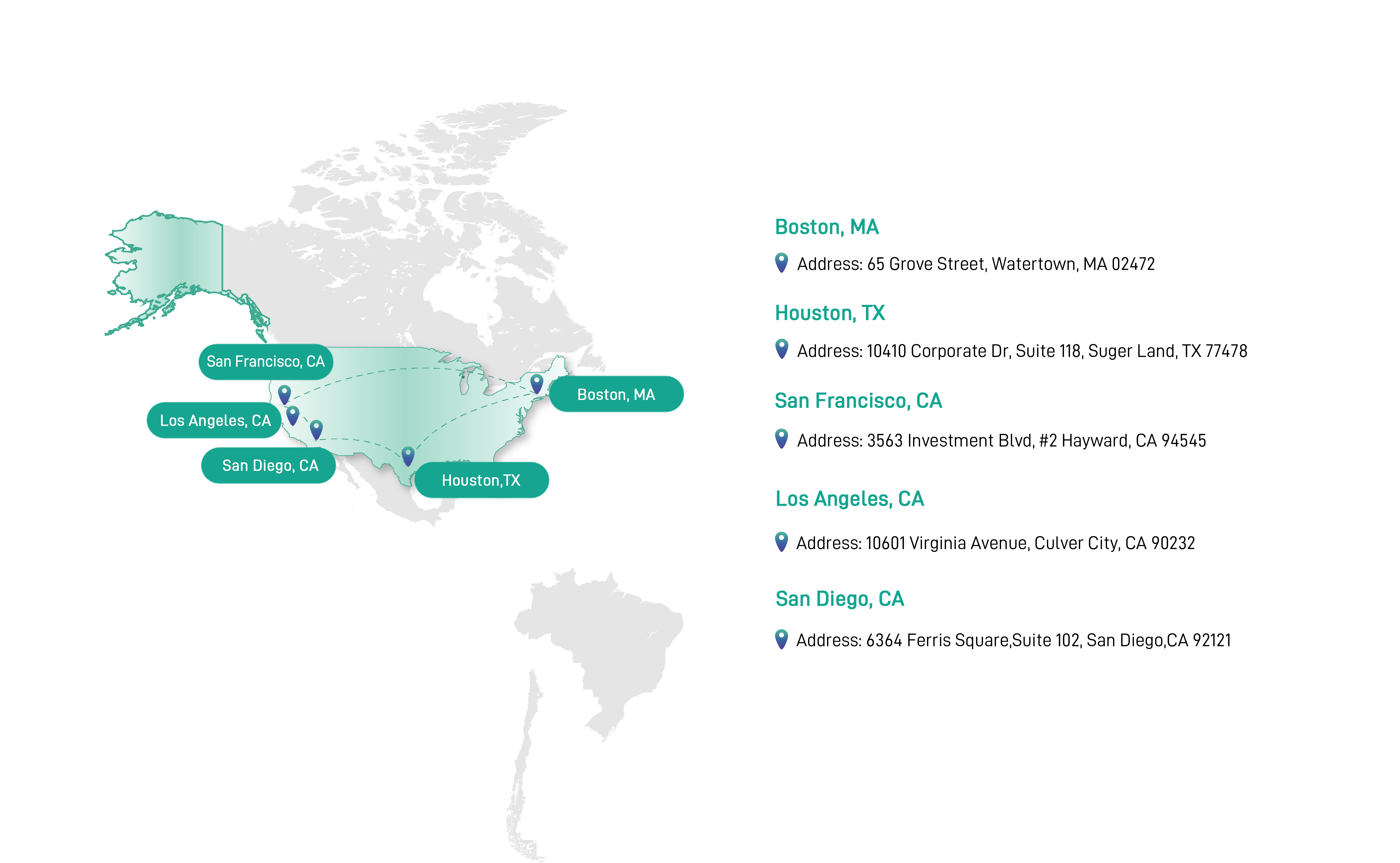
 3563 Investment Blvd, #2, Hayward, CA 94545sales.us@quintarabio.com1-617-789-611165 Grove St, Suite 102, Watertown, MA 02472sales.us@quintarabio.com1-617-789-611110410 Corporate Dr. Suite 118, Sugar Land, TX 77478
sales.us@quintarabio.com
1-424-549-091110601 Virginia Avenue, Culver City, CA 90232sales.us@quintarabio.com1-619-823-08956364 Ferris Square, Suite 102, San Diego, CA 92121Quintara Biosciences © 2025 All Rights Reserved | Site Map | Terms of Use | Privacy Policy


 Login
Login  Order
Order Contact Us
 Contact Us