Recombinant protein expression converts genetic designs into usable molecules. Host cells define expression quality via folding, post‑translational modification and secretion, shaping sample quality before purification.
Using mammalian CHO and HEK293 cells, we achieve human‑native protein folding: correct disulfide‑bond formation, physiological glycan processing, and target protein secretion into culture media. Purification begins with clarified supernatant, avoiding messy whole‑cell lysates.
Quintara covers the full pipeline: gene design/synthesis, plasmid production, transient expression, purification and QC, delivering purified functional protein starting from your DNA sequence

CHO & HEK293 Hosts, Molecule‑Matched Human‑relevant folding and glycosylation, host selected for your target protein.
In‑House, End‑to‑End Service Gene synthesis through final protein purification & QC, all completed internally.
Fast‑Track: As Fast as 2 Weeks Purified QC‑passed protein starting from your sequence.
Smooth Scale‑Up, Preserved Consistency Screen small‑scale, then expand using identical conditions for comparable results.
His / Fc / Flag — Fully Customizable Retain, cleave, or skip tags; configured for your downstream assays.
You can enter at any stage — send a sequence, or send a plasmid you already have.

Synthesis with 100% sequence verification; delivery into a QuinVector or your own backbone.

Transfection-grade DNA at the required scale, sequence-confirmed before it goes into cells.

Small-scale transient expression to confirm the construct expresses and the protein is secreted.

Culture scaled to the agreed volume, supernatant harvested, protein captured and polished.

Purity, concentration and endotoxin measured; CoA issued; protein shipped on your schedule.


Fig 1. SDS-PAGE analysis of HEK293 expressed rec. Fab antibody,
Wildtype format Fab7 vs. Engineered Cysteine Fab11d2t2 format
Lane M: Protein Marker;
Lane R: Reducing condition;
Lane NR: Non-reducing condition

Fig 2. SDS-PAGE analysis of rec. human IgG1 expressed in Human 293 cells and purified through rProA resin.
Lane M: Protein marker
Lane 1 to 10: 10 Eluate fractions with 0.1M Citrate buffer, pH3.5.

Fig 3. SDS-PAGE analysis of rec. human IgG4 expressed from Human 293 and CHO-S cells, and purified through MonoSelect Prizm A resin.
Lane M: Protein marker
Lane 1 to 14: Sample fractions eluted with 0.1M Citrate buffer, pH3.0.

Fig 4. Purification of His-tagged rec. human Tim3 protein expressed in Expi293F cells.
Lane MW: Protein marker
Lane CH: Clarified harvest
Lane FT: Flow-through fraction
Lane E2 to E4: fractions with 0.5M Imidizole, pH7.5. Gel Smear show highly glycosylated product

Fig 5. SDS-PAGE analysis of purified rec. human TNFRSF1B-hIgG1 Fc fusion protein expressed in Expi293F cells, under Reduced vs. Non-reduced conditions.
CHO is our default for proteins heading toward therapeutic or in vivo work, and generally gives the higher titers. HEK293 is preferred when you want a human glycosylation profile, fast small-scale material, or when a construct has underperformed in CHO. If there is no clear answer from the sequence, we can run a small parallel evaluation and let the data decide.
Yield depends on the protein, the construct design and the scale. We quote an expected range at the quotation stage based on the molecule, and report actual yield on delivery.
Yes. A tag can help with difficult proteins and simplifies capture, but it is optional. We can use a cleavable tag and remove it before delivery, or express untagged if the protein allows a clean capture route. Common affinity tags we work with include His, FLAG, Fc, and MBP, among others.
We find out at the small-scale evaluation stage, before committing to a full production run. From there the usual next steps are construct redesign — signal peptide swap, codon re-optimization, domain boundary adjustment — or switching host. Any of these can be quoted as a follow-up.
Yes. Send the plasmid and we will verify it and take it into transfection. Customer-supplied vectors go through a QC step first.
Above 90% purity in the majority of projects, measured chromatographically and reported on the CoA. Endotoxin is not specified on routine research-grade protein — most applications don't need it, and specifying it adds cost for nothing. If yours does, particularly animal studies, tell us at quote stage and we release at <0.1 EU/µg.
Yes — that is the point of running everything on one platform. Material produced at screening scale and at larger scale come from the same host, the same vector system and the same purification logic, so results remain comparable.
Yes, for the right targets. Extracellular domains and single-pass transmembrane proteins are routinely produced. Full-length multi-pass proteins such as GPCRs and ion channels are significantly more challenging — we evaluate them case by case and will tell you up front whether yours is likely to work.

High-throughput platform delivering purified antibodies from micrograms to milligrams.
Discover more
Quintara offers design, expression, and purification of BsAbs for therapeutics.
Discover more
Precision and custom gene synthesis from Quintara Biosciences for your research needs.
Discover more
We Go Fast, You Go Forward
 sales.us@quintarabio.com
 1-617-789-6111
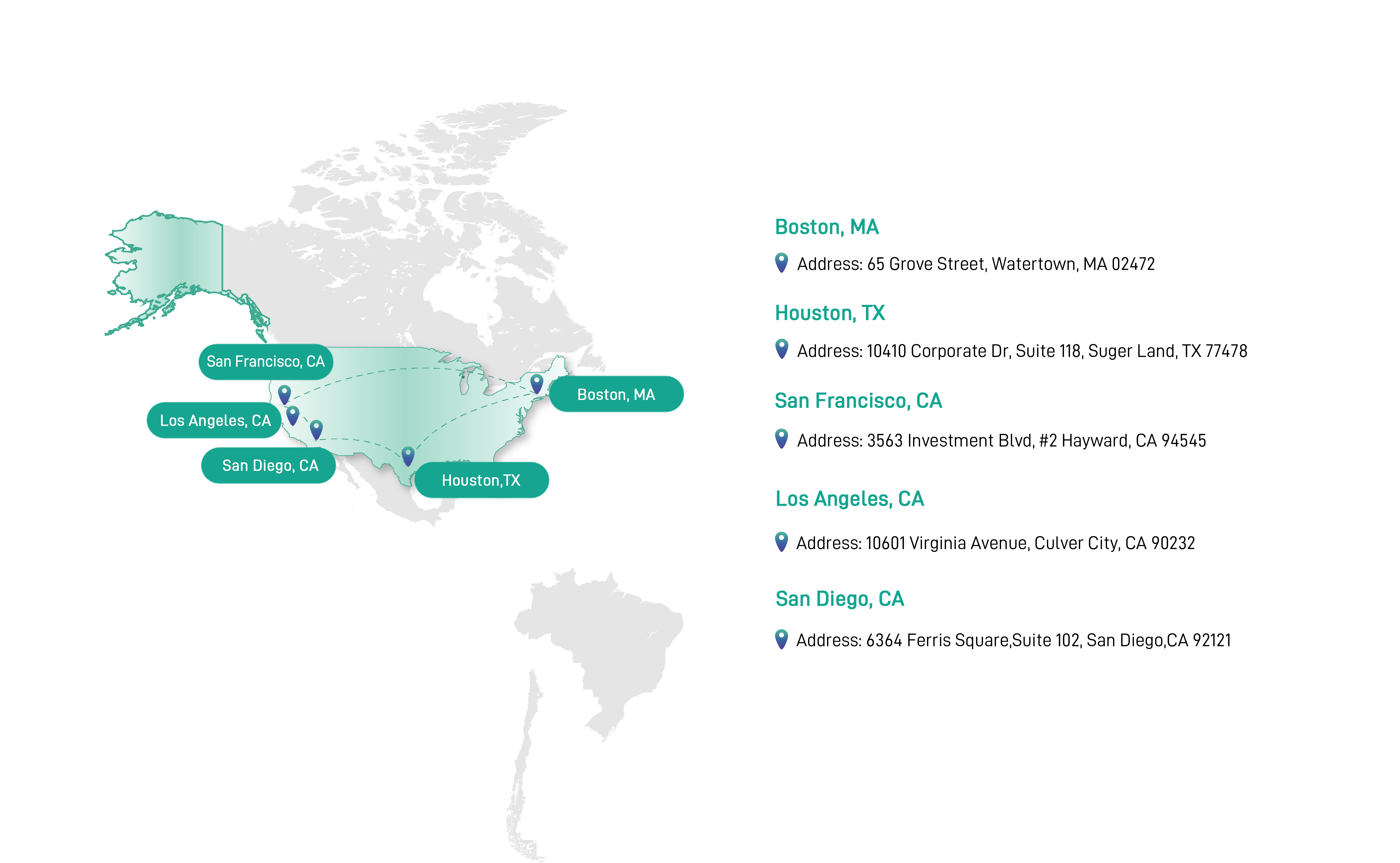
 3563 Investment Blvd, #2, Hayward, CA 94545sales.us@quintarabio.com1-617-789-611165 Grove St, Suite 102, Watertown, MA 02472sales.us@quintarabio.com1-617-789-611110410 Corporate Dr. Suite 118, Sugar Land, TX 77478
sales.us@quintarabio.com
1-424-549-091110601 Virginia Avenue, Culver City, CA 90232sales.us@quintarabio.com1-619-823-08956364 Ferris Square, Suite 102, San Diego, CA 92121Quintara Biosciences © 2025 All Rights Reserved | Site Map | Terms of Use | Privacy Policy


 Login
Login  Order
Order Contact Us
 Contact Us