When it comes to Whole Genome Sequencing (WGS), choosing the right sequencing technology can make all the difference in your research. Two popular methods, Nanopore (long-read) and NGS (short-read) sequencing, each have their strengths, and the best choice depends on your project’s needs. Let's break down both options so you can make the best decision for your research.

Feature | NGS (Short-Read) | Nanopore (Long-Read) |
| Read Length | 100–600 base pairs | Several kilobases to 100+ kb per read |
Accuracy | High accuracy (>99.99% Q30 reads) | Lower accuracy per read (typically ~95%–99% Q30 reads) |
Cost | More affordable per read, especially for large projects | Higher cost per read, but cost-effective for certain applications |
Throughput | High throughput, great for large-scale sequencing | Lower throughput, but ideal for complex genomes |
Structural Variants | Limited ability to detect large structural variants | Excellent for detecting large structural variants (CNVs, inversions, etc.) |
Genome Assembly | Works well with well-annotated genomes, struggles with complex regions | Best for de novo genome assembly, especially in complex genomes |
Repetitive Regions | Struggles with repetitive regions | Can sequence through repetitive regions and large gaps |
NGS WGS Principle | Nanopore WGS Principle | |
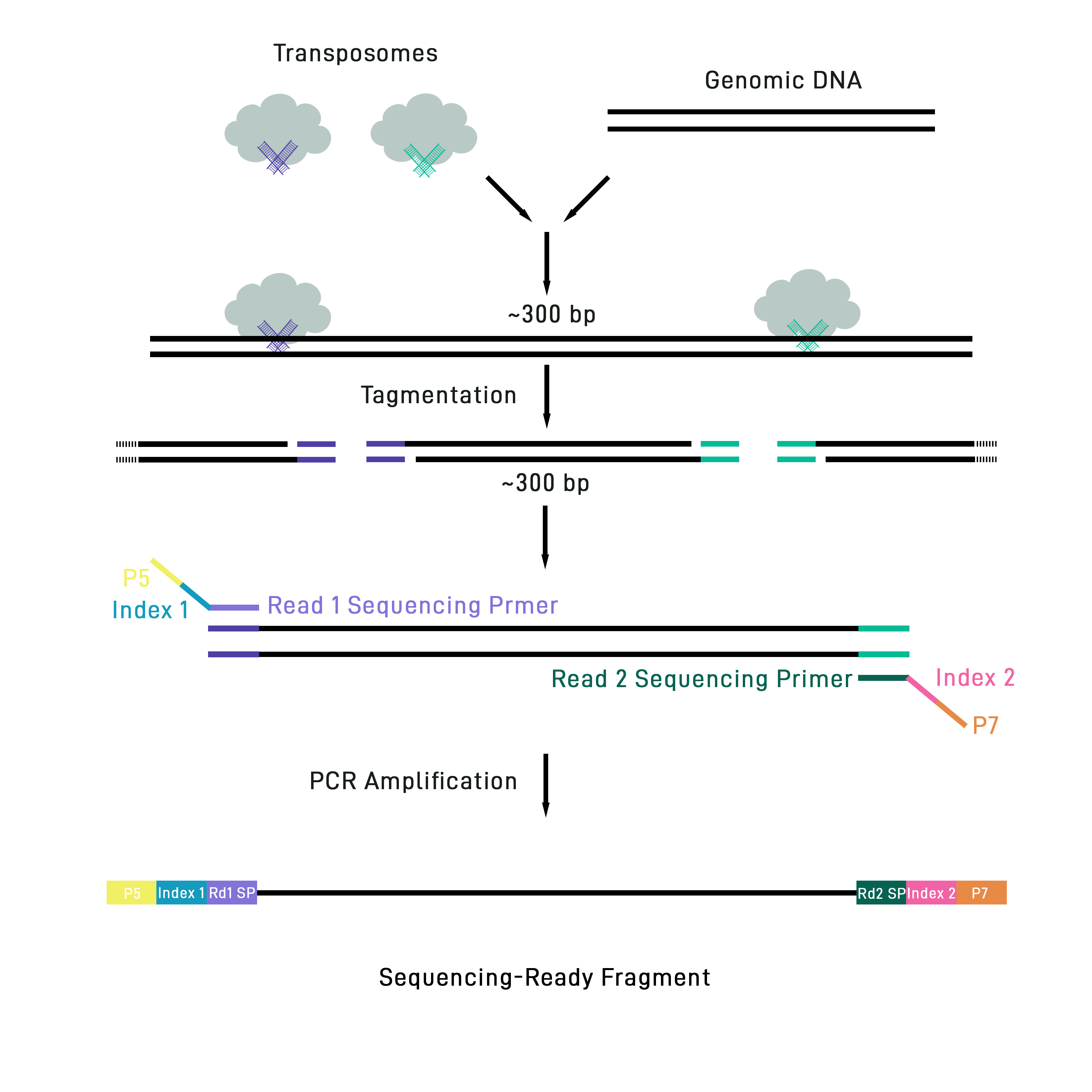 | 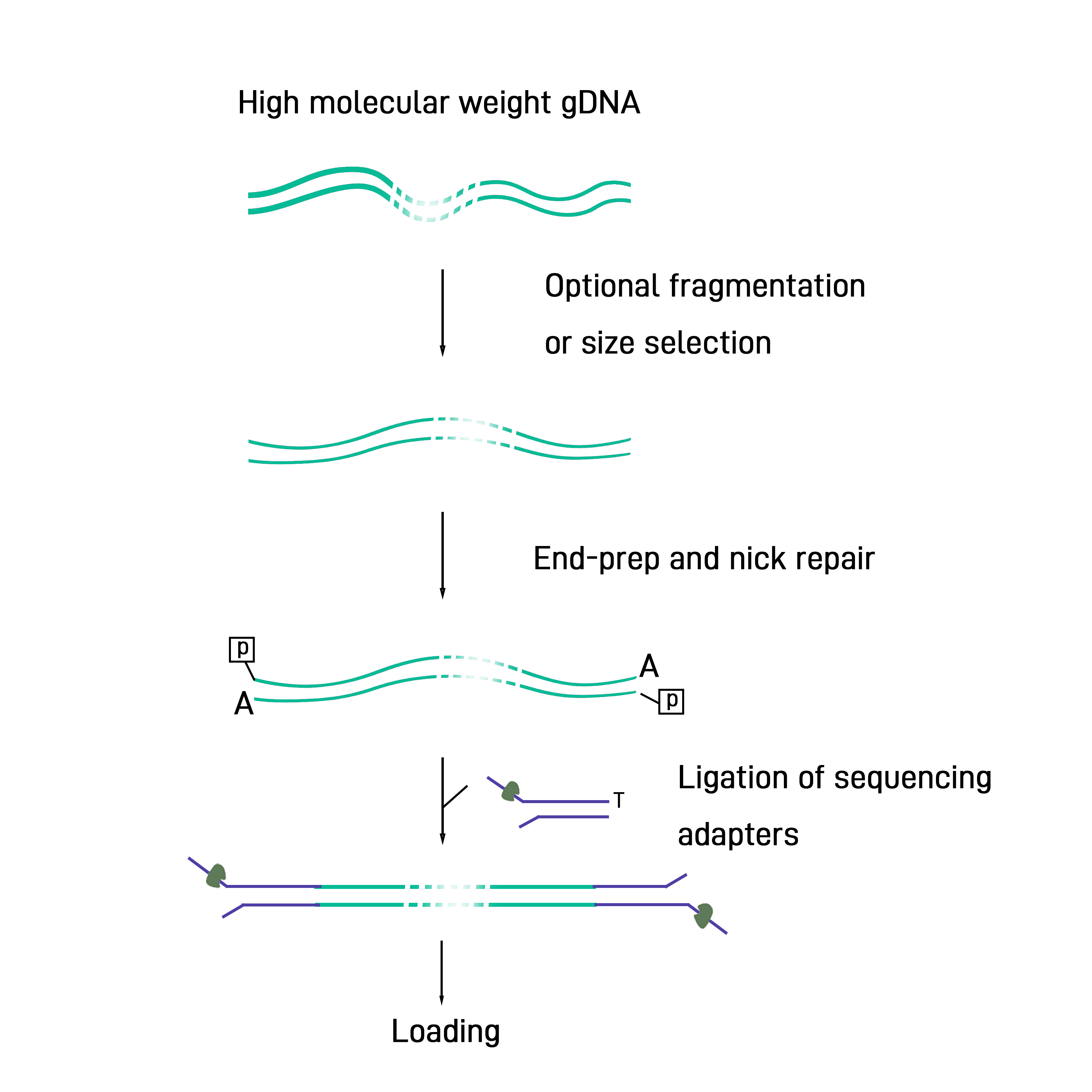 | |
NGS Short-Read Sequencing for WGS Illumina sequencing is the most widely used short-read sequencing technology. It’s great for generating highly accurate data and is ideal when you’re focusing on smaller variants like single-nucleotide polymorphisms (SNPs) or small insertions and deletions (indels). | Nanopore Long-Read Sequencing for WGS Nanopore sequencing (from Oxford Nanopore Technologies) is a long-read sequencing technology that generates much longer DNA reads, often from several kilobases to over 100 kilobases. This is especially useful for complex genomes, structural variations, and areas that are hard to sequence with short reads. | |
Why Choose NGS for WGS?
| Why Choose Nanopore for WGS?
| |
Best for You If:
| Best for You If:
| |
Limitations:
| Limitations:
|
Ultimately, the choice between NGS short-read sequencing and Nanopore long-read sequencing comes down to your specific needs:
Go with NGS if you need cost-effective, high-throughput sequencing for well-characterized genomes or if you're primarily interested in detecting small variants.
Go with Nanopore if you're dealing with a complex genome, need to detect structural variants, or are conducting a de novo assembly.
If you’re still unsure which platform is best for your project, we’re here to help! For any questions or inquiries, feel free to reach out to our team at sales.us@quintarabio.com, and we’ll be happy to assist you in selecting the best method for your project.


Quintara delivers fast, affordable NGS sequencing using advanced platforms.
Discover more
Quintara’s Nanopore plasmid sequencing: fast, affordable, nationwide.
Discover more
Nanopore amplicon sequencing enables fast long‑read targeted validation.
Discover more
We Go Fast, You Go Forward
 sales.us@quintarabio.com
 1-617-789-6111
 3563 Investment Blvd, #2, Hayward, CA 94545sales.us@quintarabio.com1-617-789-611165 Grove St, Suite 102, Watertown, MA 02472sales.us@quintarabio.com1-617-789-611110410 Corporate Dr. Suite 118, Sugar Land, TX 77478
sales.us@quintarabio.com
1-424-549-091110601 Virginia Avenue, Culver City, CA 90232sales.us@quintarabio.com1-619-823-08956364 Ferris Square, Suite 102, San Diego, CA 92121Quintara Biosciences © 2025 All Rights Reserved | Site Map | Terms of Use | Privacy Policy


 Login
Login  Order
Order Contact Us
 Contact Us