From sequence design and gene synthesis to IVT mRNA production and LNP encapsulation, Quintara brings the key stages of mRNA development together in one integrated workflow. Whether you start with a protein coding sequence, or an mRNA sequence, our flexible service portfolio accelerates your project from starting sequence to finished mRNA or mRNA-LNP. A single integrated partner eliminates multiple supplier handoffs and reduces coordination burden. With sequence design, template build, mRNA synthesis and LNP encapsulation managed together, standardized technical oversight and QC mitigate compatibility risks, simplify project management, and deliver greater workflow consistency.


Optimize coding sequences and key sequence elements for efficient IVT transcription and mRNA quality.
IVT Compatibility - Evaluate sequence features relevant to T7 transcription.
Expression Optimization - Design with downstream protein expression in mind.
Risk Screening - Review GC, repeats, structure, and sequence risks.
Start Here
Have a protein or coding sequence? → Optimize it for IVT & expression.
Build sequence-verified plasmids with optimized mRNA elements and an IVT-ready vector architecture.
Quintara Optimized UTRs - Proprietary 5′ and 3′ UTR designs.
Flexible Poly(A) Architecture - 60A and 100A configurations available.
IVT-Ready Vector Design - Integrated T7 promoter and defined linearization sites.
Start Here
Have an optimized sequence? → Build the plasmid template.
Prepare, purify, and precisely linearize plasmid DNA to create a clean, consistent transcription template.
High-Purity DNA - Clean and consistent plasmid preparation.
Complete Linearization - Verified conversion to the intended linear template.
Template Integrity - Intact DNA with controlled quality for consistent production.
Start Here
Have a plasmid? → Prepare and linearize it for IVT.
Validated plasmid architecture designed to maintain long Poly(A) sequences during cloning and plasmid production.
Validated Vector Architecture – Maintains long Poly(A) sequences with minimal truncation.
Stable Plasmid Propagation – Reduces Poly(A) instability during cloning and amplification.
Consistent IVT Template – Uniform DNA templates for reproducible mRNA synthesis.
Start Here
Need long-encoded Poly(A)? → Choose a vector designed for stability.
Generate research-ready mRNA with flexible specifications, comprehensive QC, and ready-to-use product options.
Custom IVT – Tailored cap, poly(A), nucleotide, and sequence design.
Strict QC – Verify mRNA integrity, purity, identity, and key product attributes.
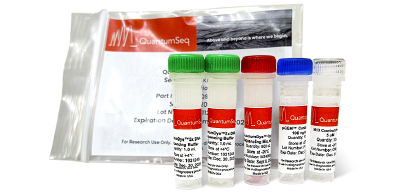
Off-the-Shelf - Ready-made mRNA products for rapid experimental initiation
Start Here
Need mRNA? → Choose custom production or ready-to-use products.
Formulate purified mRNA into characterized LNPs with flexible lipid options and optimized encapsulation conditions.
Flexible Lipids - Validated formulations and customer-supplied lipid options.
FTO-Ready Options - Formulations selected to support research with freedom-to-operate considerations.
Strict QC - Characterize particle size, PDI, encapsulation efficiency, and key formulation attributes.
Start Here
Need LNP encapsulation? → Formulate it into LNPs for delivery studies.
From sequence design to mRNA-LNP, our integrated workflow brings together gene synthesis, DNA template preparation, mRNA synthesis, and LNP encapsulation—streamlining the path from your sequence to your final RNA product.
1
Optimization
2
Synthesis & Cloning
3
Prep & Linearization
4
Verification
5
IVT & QC
6
Encapsulation

Scientific Background
T7 RNA polymerase generally favors G‑rich sequences at the transcription initiation site, making GGG a commonly used initiation sequence for IVT mRNA synthesis. However, the optimal initiation sequence cannot be determined by transcription efficiency alone. When co‑transcriptional capping is incorporated into the IVT process, the initiation sequence must also be considered in relation to the selected capping chemistry and its mechanism of transcription initiation.
Project Summary
The customer selected our partner‑supplied AG‑type Cap1 structure as an IP‑conscious capping option for their mRNA production. To improve template compatibility with the selected capping workflow, we evaluated the 5′ initiation region and optimized the initiation sequence from GGG to GAG, while preserving the intended coding sequence.
This process‑specific template engineering is designed to align the construct with the AG‑type Cap1 system. The design objectives include improved capping efficiency and reduced formation of 5′‑triphosphorylated impurities, together with robust transcription initiation and controlled 5′‑end formation within the chosen production workflow.

Fig. Schematic of Template Design Before and After Initiation Motif Engineering
Scientific Background
Conventional gene synthesis typically focuses on accurate DNA sequence construction and cloning, without necessarily considering the sequence and architectural requirements of IVT-mRNA production. An mRNA-focused vector platform can integrate essential elements—including optimized UTRs, a validated Kozak sequence, a defined Poly(A) sequence, and strategically positioned linearization sites—into a standardized template architecture. This provides a consistent foundation for efficient IVT template construction across different coding sequences.
Project Summary
We developed proprietary mRNA-focused vectors specifically designed for IVT-mRNA template construction. The vector architecture incorporates validated UTR elements, a validated Kozak sequence, and a defined 100–120 bp Poly(A) sequence to support mRNA stability and translation. For each CDS, sequence optimization can include GC content and codon adaptation, while predicted secondary structures and unwanted restriction sites are evaluated during construct design. A unique IIS restriction site downstream of the Poly(A) region enables precise linearization of the plasmid to generate the intended transcription template.
By integrating mRNA-specific sequence elements with a standardized vector architecture, Quintara provides a consistent framework for IVT template construction while maintaining flexibility for different coding sequences and mRNA designs.
Scientific Background
mRNA-based expression systems are widely used to evaluate RNA stability, translation, and intracellular activity. eGFP, originally derived from Aequorea victoria, is a well-established fluorescent reporter for monitoring mRNA expression. Key mRNA features—including Cap1, N1-methylpseudouridine (m¹Ψ), and a defined poly(A) tail—can support mRNA stability, translation efficiency, and reduced innate immune recognition, making eGFP mRNA a useful model for RNA research and development.
Project Summary
To verify the expression efficiency of Quintara’s off-the-shelf mRNA products, we delivered our eGFP mRNA (m1Ψ) into 293T cells via transient transfection. Experimental results demonstrate that the proportion of eGFP-positive cells exceeded 95% at 24 hours post-transfection. Our ready-to-use stock products serve as high-quality standard experimental controls for customers, guaranteeing reliable and reproducible research data.
eGFP mRNA

Bright field

Fig. Expression of Quintara eGFP mRNA in 293T cells (24 h post-transfection)

Quintara offers a flexible mRNA synthesis platform supporting preclinical in vitro, in vivo.
Discover more
Precision and custom gene synthesis from Quintara Biosciences for your research needs.
Discover more
High-quality plasmid DNA with 100% full-sequence accuracy and guaranteed yield.
Discover more
Gene Synthesis - Linear Plasmid - mRNA Synthesis - LNP Encapsulation

We Go Fast, You Go Forward
 sales.us@quintarabio.com
 1-617-789-6111
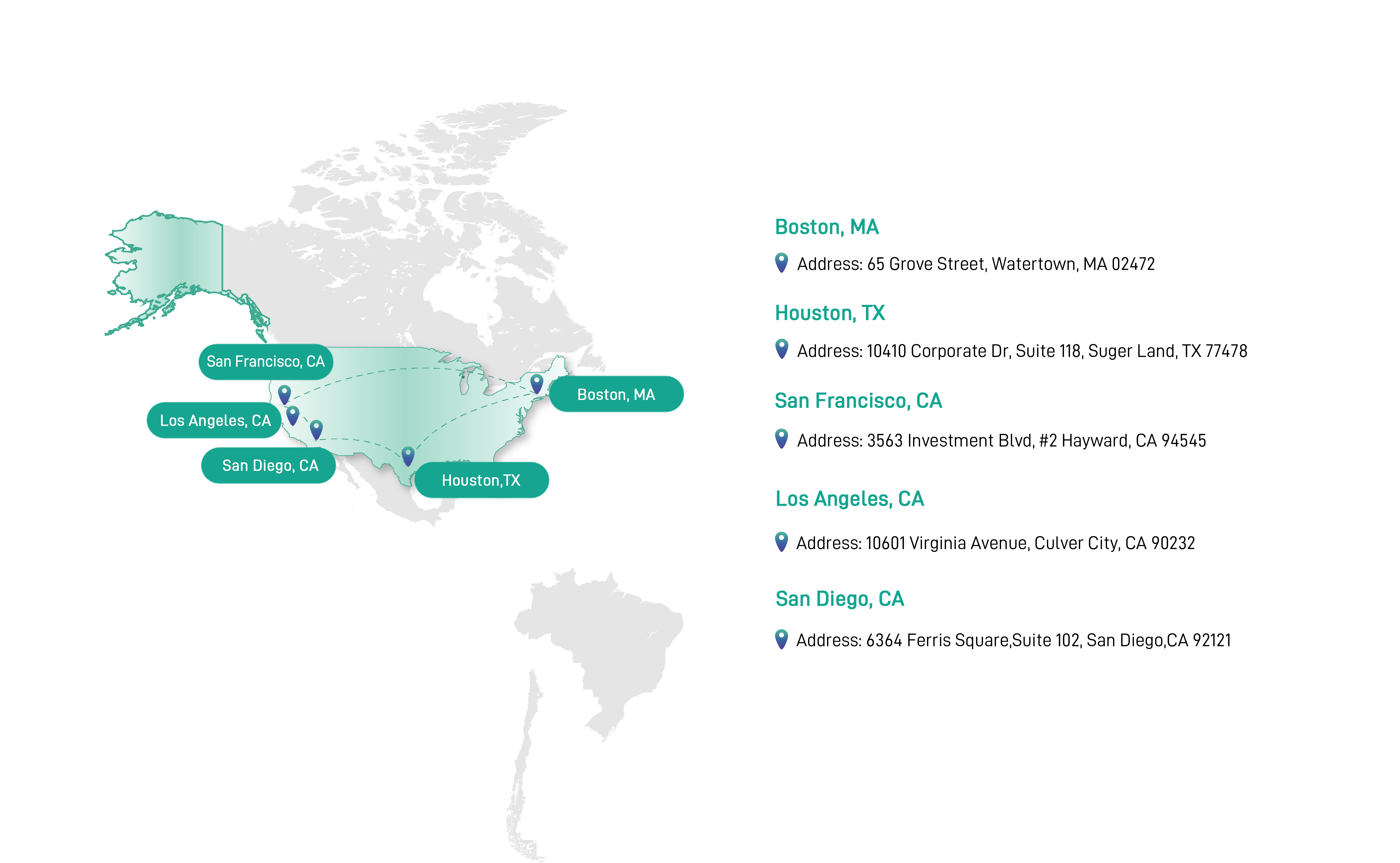
 3563 Investment Blvd, #2, Hayward, CA 94545sales.us@quintarabio.com1-617-789-611165 Grove St, Suite 102, Watertown, MA 02472sales.us@quintarabio.com1-617-789-611110410 Corporate Dr. Suite 118, Sugar Land, TX 77478
sales.us@quintarabio.com
1-424-549-091110601 Virginia Avenue, Culver City, CA 90232sales.us@quintarabio.com1-619-823-08956364 Ferris Square, Suite 102, San Diego, CA 92121Quintara Biosciences © 2025 All Rights Reserved | Site Map | Terms of Use | Privacy Policy


 Login
Login  Order
Order Contact Us
 Contact Us