We Go Fast,You Go Forward
August 11, 2026
DNA sequencing has become an essential tool across molecular biology, genetics, synthetic biology, gene editing, drug discovery, and clinical research. However, choosing the right DNA sequencing service can be challenging. With multiple technologies available—including Sanger Sequencing, Next-Generation Sequencing (NGS), and Nanopore Sequencing—researchers must balance accuracy, turnaround time, cost, read length, and project requirements.
Selecting the wrong sequencing approach can lead to unnecessary expenses, delayed timelines, and incomplete results. This guide will help you identify the best DNA sequencing service for your research project and maximize the value of your sequencing budget.
Before comparing sequencing providers, clearly identify what you need to accomplish.
Ask yourself:
Are you validating a plasmid construct?
Confirming a CRISPR edit?
Sequencing PCR amplicons?
Detecting rare mutations?
Characterizing a microbial genome?
Performing transcriptome analysis?
Different applications require different sequencing technologies.
Research Goal | Recommended Technology |
Single clone verification | Sanger Sequencing |
CRISPR editing validation | Nanopore or Sanger |
Long plasmid verification | Nanopore Sequencing |
Variant discovery | NGS |
Whole-genome sequencing | NGS or Nanopore |
Amplicon sequencing | Nanopore or NGS |
Structural variant detection | Nanopore Sequencing |
Understanding your end goal is the first step toward selecting the right service.
One of the most important factors is the length of DNA you need to sequence.
Typical read length: 700–1,000 bp
High accuracy
Requires primer design
Limited for larger constructs
Typical read length: 150–300 bp
Generates millions of reads
Ideal for large-scale projects
Short reads may complicate assembly
Read lengths from several kilobases to entire plasmids
Direct sequencing of long DNA fragments
Excellent for structural analysis
If your project involves plasmids, CRISPR knock-ins, repetitive regions, or long amplicons, long-read sequencing may significantly simplify data analysis.
Many researchers assume the highest accuracy always delivers the best result. In reality, the required accuracy depends on the application.
Clone screening
Mutation confirmation
Small insert validation
Low-frequency mutation detection
Population studies
Cancer genomics
Modern Nanopore sequencing has improved dramatically in recent years, making it suitable for many routine validation workflows while providing significantly more sequence context than traditional methods.
The key question is not "Which technology is most accurate?" but rather "Which technology provides sufficient accuracy for my biological question?"
Research delays often cost more than sequencing itself.
Technology | Typical Turnaround |
Sanger Sequencing | 1–3 days |
NGS | 1–4 weeks |
Nanopore Sequencing | Overnight to several days |
CRISPR editing
Clone selection
Synthetic biology workflows
Time-sensitive experiments
Fast turnaround can significantly accelerate research progress.
Researchers increasingly prioritize sequencing providers that offer overnight or next-day results to avoid bottlenecks in experimental workflows.
Many labs focus only on the sequencing price per sample. However, the true cost includes:
Sample preparation
Primer design
Repeat sequencing
Failed validation experiments
Delayed project timelines
For example, a seemingly inexpensive sequencing method may require multiple reactions to cover a large plasmid, ultimately increasing overall costs.
When comparing providers, consider:
✓ Cost per sample
✓ Cost per base
✓ Number of required reactions
✓ Data analysis support
✓ Success rate
The lowest listed price is not always the most economical option.
A sequencing provider should offer more than raw data.
Look for:
Quality Control
Sample QC checks
Data quality metrics
Transparent reporting
Technical Support
Sequencing consultation
Troubleshooting assistance
Experimental recommendations
Data Interpretation
Alignment analysis
Variant calling
Consensus sequence generation
Strong technical support can save researchers substantial time and reduce experimental risk.
Best choice: Sanger Sequencing
Benefits:
Simple
Cost-effective
High accuracy for short regions
Best choice: Nanopore Sequencing
Benefits:
Detects large insertions and deletions
Validates long edits
Provides full-region coverage
Best choice: NGS
Benefits:
Massive throughput
High coverage depth
Cost-effective at scale
Best choice: Nanopore Sequencing
Benefits:
Full-length plasmid sequencing
Structural variant detection
Reduced assembly complexity
Before placing an order, ask:
What sequencing technology is best suited for my application?
What is the expected turnaround time?
What quality control measures are included?
Is technical support available?
Can the provider handle complex constructs or long reads?
What data formats will I receive?
Are bioinformatics services included?
The answers will help you identify the provider that best aligns with your research goals.
Choosing the right DNA sequencing service is not simply about selecting the latest technology or the lowest price. The ideal solution depends on your research objective, read length requirements, accuracy needs, turnaround expectations, and budget.
For routine validation, Sanger sequencing remains a reliable option. For large-scale genomic studies, NGS offers unparalleled throughput. For long-read applications, plasmid verification, and CRISPR validation, Nanopore sequencing is rapidly becoming the preferred choice due to its speed, flexibility, and ability to generate comprehensive sequence information.
By aligning your sequencing strategy with your scientific goals, you can reduce costs, accelerate discovery, and generate more reliable results.
✅ Define your biological question before selecting a sequencing method
✅ Match read length requirements to the appropriate technology
✅ Consider turnaround time alongside accuracy and cost
✅ Evaluate total project cost, not just sequencing price
✅ Choose a provider that offers strong technical support
✅ Select the sequencing platform that best fits your workflow—not necessarily the newest one
The right sequencing service should help answer your scientific question faster, more accurately, and more efficiently.

We Go Fast, You Go Forward
 sales.us@quintarabio.com
 1-617-789-6111
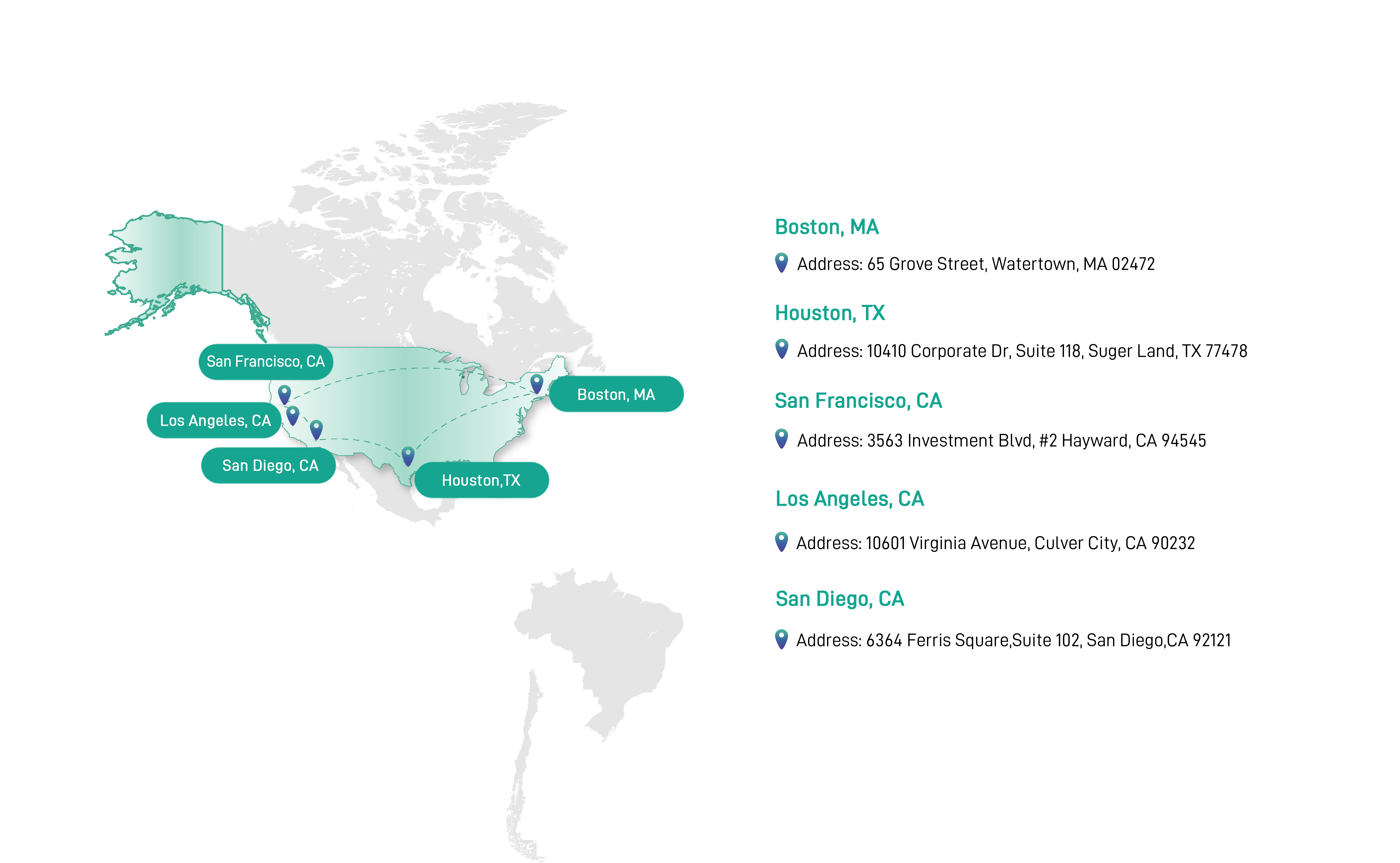
 3563 Investment Blvd, #2, Hayward, CA 94545sales.us@quintarabio.com1-617-789-611165 Grove St, Suite 102, Watertown, MA 02472sales.us@quintarabio.com1-617-789-611110410 Corporate Dr. Suite 118, Sugar Land, TX 77478
sales.us@quintarabio.com
1-424-549-091110601 Virginia Avenue, Culver City, CA 90232sales.us@quintarabio.com1-619-823-08956364 Ferris Square, Suite 102, San Diego, CA 92121Quintara Biosciences © 2025 All Rights Reserved | Site Map | Terms of Use | Privacy Policy


 Login
Login  Order
Order Contact Us
 Contact Us