We Go Fast,You Go Forward
August 04, 2026
Plasmids are the workhorses of modern molecular biology — essential tools for cloning, CRISPR gene editing, gene therapy development, synthetic biology, and recombinant protein expression. As constructs grow larger and more complex, verifying their complete sequence is no longer optional. Partial or incomplete validation risks costly experimental failures, regulatory non-compliance, and delays in critical research timelines.
The core problem: Traditional Sanger sequencing reads only ~800–1,000 bp at a time, requires multiple custom primers, and routinely misses structural variants, repetitive regions, and GC-rich elements — leaving your construct only partially validated. |
For decades, Sanger has served as the default for plasmid validation. But it increasingly falls short for modern research demands:
• Short read length (<1,000 bp) requiring iterative primer walking across the plasmid
• Systematic coverage gaps in large inserts, repetitive regions, and GC-rich sequences
• Time-consuming primer design — easily adding days to each project
• Poor resolution of structural variants, inversions, and complex regulatory elements
• Slow and expensive turnaround for plasmids >5 kb
Whole plasmid sequencing (WPS) is a long-read sequencing method that determines the complete sequence of a circular plasmid in a single, primer-free workflow. Using Oxford Nanopore Technology, ultra-long reads span the entire plasmid — backbone, insert, regulatory elements, origins of replication, selection markers — multiple times, enabling high-accuracy de novo consensus assembly without any reference sequence.
• Full, uninterrupted coverage of the entire plasmid (backbone + insert)
• Confident detection of structural variants, rearrangements, and unexpected mutations
• Superior resolution of repetitive sequences, GC-rich regions, and inverted repeats (e.g., AAV ITRs)
• Completely primer-free — no design, no walking, no gaps
• High-accuracy de novo consensus assembly — no reference genome required
• Industry-leading turnaround: standard results in 24–48 hours
Submit purified plasmid DNA, crude bacterial cultures, or RCA products — we handle the rest. Supercoiled plasmids are fully supported. Sample concentration and purity checks are performed upon receipt to ensure optimal read length and consensus accuracy.
Your plasmid DNA is loaded onto a nanopore flow cell. As individual molecules thread through nanopores, real-time electrical signals are captured and converted to sequence data using advanced AI basecalling. A single read can span the entire plasmid multiple times, delivering continuous, gap-free coverage.
Raw long reads are assembled into a complete circular consensus sequence without any reference plasmid. This unbiased approach reliably detects unexpected mutations, structural rearrangements, insertions, deletions, and inversions that short-read methods consistently miss.
Every final sequence undergoes rigorous quality control and annotation: ORF verification, insert orientation, fusion tag confirmation, promoter/terminator integrity, and full variant reporting. You receive a complete, ready-to-use sequence report with annotated plasmid maps.
See how Nanopore WPS compares to traditional sequencing technologies:
Feature | Sanger Sequencing | Short-Read NGS | Nanopore WPS ✓ |
Read Length | ~800–1,000 bp | 150–300 bp | Full plasmid (up to 25 kb+) |
Primer Required | Multiple primers | No | Primer-free |
Structural Variant Detection | Limited | Poor | Excellent |
Repetitive Region Resolution | Poor | Poor | Superior |
Coverage | Partial | Fragmented | Complete, end-to-end |
Turnaround Time | Days–weeks | 3–5 days | 24–48 hours |
Best For | Small routine checks | Variant screening | Complex / large / critical constructs |
Full-Length Plasmid Verification – Complete sequence confirmation for all constructs before downstream use
CRISPR & Gene Editing Vector QC – Validate gRNA sequences, Cas9 constructs, donor templates, and editing vector integrity
Viral Vector & AAV Plasmid Analysis – Confirm ITR integrity, packaging signals, and structural stability — critical for gene therapy
Synthetic Biology Constructs – Verify multi-fragment assemblies, large inserts, and complex synthetic designs
High-GC & Repetitive Region Sequencing – Accurately resolve regions that routinely fail in Sanger and short-read workflows
Regulatory-Grade Quality Control – Support IND submissions, GMP production, and bioproduction QC workflows
Standard service: 24–48 hours from sample receipt
Express/overnight service: available for standard plasmids
Flexible options tailored to plasmid size, sample quality, and coverage requirements
7-day/week processing with no weekend delays
As a full-platform CRO offering Sanger, NGS, and Nanopore under one roof, we are uniquely positioned to recommend and deliver the right sequencing strategy for every project:
One-Stop Sequencing: Sanger, NGS, and Nanopore WPS — all from a single partner
Deep Expertise: Specialized team with hands-on plasmid biology and sequencing knowledge
Flexible Sample Input: Purified DNA, bacterial cultures, crude samples — all accepted
Comprehensive Reports: Annotated sequences, variant analysis, visual plasmid maps
Hybrid Services: Combine WPS with Sanger or NGS confirmation for maximum confidence
Transparent Pricing: Competitive, project-sized quotes with no hidden fees
Dedicated Support: Personal project management and expert technical consultation
Q: What plasmid sizes can you sequence?
A: We routinely sequence plasmids up to 25 kb and beyond, with complete end-to-end coverage.
Q: Does WPS require primers?
A: No — our Nanopore WPS is entirely primer-free, eliminating design time and coverage gaps.
Q: Can WPS detect structural variants?
A: Yes. It excels at detecting insertions, deletions, inversions, and complex rearrangements across the entire plasmid.
Q: What sample types are accepted?
A: Purified plasmid DNA, bacterial cultures, and RCA products. Supercoiled plasmids are fully supported.
Q: Do you provide annotated results?
A: Yes — every report includes full annotation, ORF analysis, variant summary, and visual plasmid maps.
Q: Can you handle difficult sequences?
A: Yes — we specialize in GC-rich, repetitive, and structurally complex plasmids that challenge traditional methods.
Q: Can WPS be combined with Sanger or NGS?
A: Absolutely. We offer hybrid sequencing workflows for projects requiring multiple validation layers.
As plasmid constructs become larger and more complex, partial sequencing is no longer sufficient. Nanopore-powered whole plasmid sequencing delivers complete, high-confidence verification of your entire construct — including the challenging regions that traditional methods consistently miss. With faster turnaround, zero primer design, and comprehensive reporting, WPS is the modern standard for plasmid validation.

We Go Fast, You Go Forward
 sales.us@quintarabio.com
 1-617-789-6111
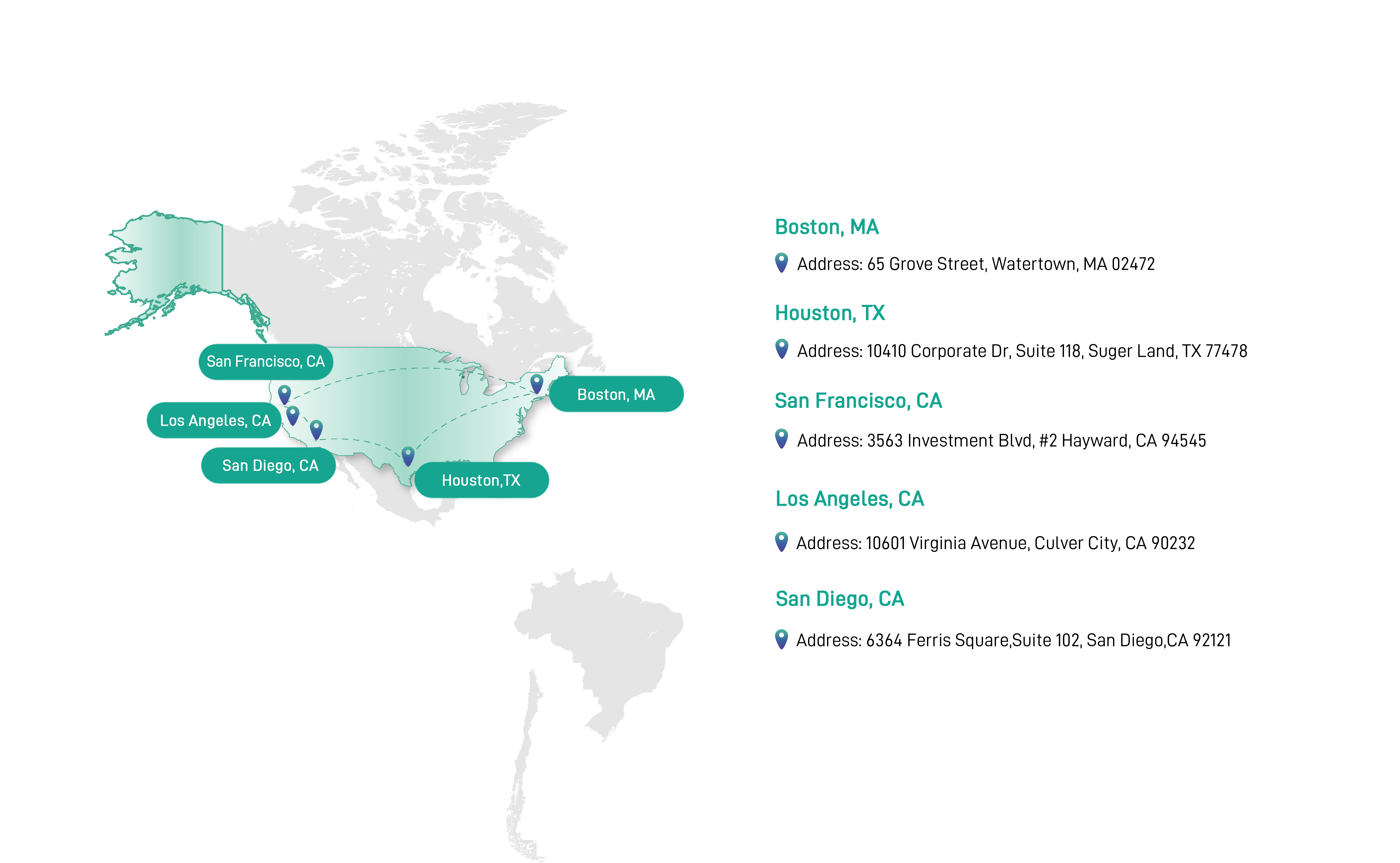
 3563 Investment Blvd, #2, Hayward, CA 94545sales.us@quintarabio.com1-617-789-611165 Grove St, Suite 102, Watertown, MA 02472sales.us@quintarabio.com1-617-789-611110410 Corporate Dr. Suite 118, Sugar Land, TX 77478
sales.us@quintarabio.com
1-424-549-091110601 Virginia Avenue, Culver City, CA 90232sales.us@quintarabio.com1-619-823-08956364 Ferris Square, Suite 102, San Diego, CA 92121Quintara Biosciences © 2025 All Rights Reserved | Site Map | Terms of Use | Privacy Policy


 Login
Login  Order
Order Contact Us
 Contact Us