We Go Fast,You Go Forward
July 30, 2026
From intelligent molecular design to experimental validation, AI is reshaping how the next generation of antibody therapeutics is discovered, optimized, and developed.
The development of therapeutic antibodies has traditionally relied heavily on iterative screening, experimental optimization, and expert experience. While these approaches have generated many successful biologics, they can also create significant challenges: large sequence spaces, lengthy screening cycles, complex developability trade-offs, and the risk of discovering critical liabilities only after substantial time and resources have been invested.
AI is changing this paradigm. By integrating AI-powered prediction with high-throughput experimentation, antibody development can move from a largely trial-and-error process toward a data-driven, iterative, and increasingly predictive workflow.
Quintara Bioscience is building an integrated AI-enabled platform designed to accelerate early-stage antibody drug discovery, engineering, and development—from antibody discovery and sequence optimization to protein expression and functional validation.
AI-powered mining of biological and molecular data can uncover patterns that are difficult to identify through conventional empirical approaches alone. By integrating sequence, structure, binding, and functional information, computational models can help researchers better understand target biology and identify promising molecular designs.
AI-generated designs are tested experimentally, experimental results are fed back into the models, and subsequent designs are continuously refined. This creates an iterative learning system in which each experiment contributes to improving future design decisions.
A molecule with excellent binding affinity may still suffer from poor expression, low thermal stability, aggregation , or poor solubility. AI can help address these competing requirements simultaneously by considering affinity, thermal stability, solubility, aggregation, and expression titer during the design process.
Identifying potential liabilities early—including structural defects, aggregation hotspots, sequence liabilities, and immunogenicity risks—can help researchers prioritize candidates with stronger development potential from the beginning.
Antibody engineering is no longer simply about finding the strongest binder. For a candidate to progress toward clinical development, it needs to balance potency, stability, manufacturability, safety, and other developability characteristics.
AI-assisted 3D motif assessment can help identify potential structural liabilities at the molecular design stage, enabling problematic architectures to be addressed before extensive experimental investment.
Transformer-based models and advanced structure prediction approaches can expand exploration of sequence space and identify potentially high-performing variants.
AI-guided engineering can simultaneously consider binding affinity, thermal stability, solubility, expression yield, aggregation propensity, sequence liabilities, and manufacturability.
Potential T-cell and B-cell epitopes can be evaluated during early-stage development to identify potential immunogenicity risks before candidates progress into more expensive development stages.
Bispecific antibodies introduce another layer of complexity. Unlike conventional monoclonal antibodies, bispecific molecules must coordinate two distinct target-binding functions while maintaining structural integrity, expression, purification, and overall developability.
Structural instability and chain mispairing
Complex expression and purification
Balancing binding kinetics between two targets
Maintaining synergistic biological activity
Managing affinity, immunogenicity, and developability trade-offs
AI can help identify and redesign structural regions associated with instability or poor developability.
Computational models can support optimization of dual-target binding characteristics, helping researchers explore combinations that may achieve stronger functional synergy.
AI-guided design can prioritize candidates with more desirable predicted profiles before experimental testing. Quintara’s platform data indicate the potential for 40% or more reduction in R&D time in selected antibody development workflows.
AI alone cannot develop a therapeutic antibody. The quality of AI predictions depends fundamentally on the quality of the underlying biological data and experimental feedback. This is why the integration of computational intelligence with wet-lab capabilities is critical.
Fully human synthetic phage libraries, rapid immunization and single B-cell technologies, optimized yeast display, and AI-assisted candidate screening support rapid lead generation. Selected workflows target a 3–4 week cycle from target to lead candidates.
Humanization, affinity maturation, sequence optimization, developability engineering, bispecific antibody engineering, and ADC/multispecific protein engineering help transform promising binders into molecules with stronger overall development profiles.
High-throughput expression supports efficient production of antibodies and antigens for experimental validation. BLI and SPR can characterize binding kinetics and affinity, while epitope mapping supports analysis of binding specificity and mechanism of action.
Disease-relevant cell models, 3D culture models, ADCC/CDC assays, proliferation and apoptosis assays, pathway modulation, in vitro and in vivo efficacy testing, early PK, and safety profiling connect AI predictions to biological performance.
AI-driven drug development requires more than algorithms. It requires high-quality, structured, and continuously expanding biological data.
Quintara’s platform incorporates a proprietary multi-modal antibody database containing more than 100,000 structure-function entries, providing a data foundation for model development and prediction.
Experimental results are continuously fed back into the development process, creating a reinforcing cycle:
More Designs → More Experiments → More Data → Better Models → Better Designs
AI-guided engineering converted a murine antibody into a humanized format while maintaining comparable binding affinity. Subsequent affinity maturation identified variants with more than 10-fold improvement in binding affinity compared with the parental antibody. The result demonstrates how antibody engineering can potentially improve therapeutic compatibility and molecular performance together.


A novel anti-PD-1 antibody was engineered with independent intellectual property in mind. Structural regions were redesigned to reduce similarity while maintaining stability and biological function. The candidate achieved key structural region similarity below 85.7%, binding kinetics comparable to the originator antibody, and enhanced antagonistic activity in a reporter gene assay.

A modular bispecific format was engineered with strong expression, simplified purification, and improved biological synergy. The lead molecule achieved an expression titer >140 mg/L, >96% purity after single-step purification, and stronger biological activity than selected clinical benchmarks.

AI-assisted engineering transformed a high-risk seed antibody into a more development-ready candidate by reducing aggregation and immunogenicity hotspots while preserving antigen-binding activity. The optimized lead demonstrated reduced developability risks, maintained target-binding affinity, improved in vivo stability, and improved PK characteristics.

Data comparison showing AI-optimized lead (V-lead) maintains target affinity while exhibiting superior in vivo stability and PK profile compared to the parent seed antibody
The ultimate value of an AI platform is not simply generating better sequences. It is helping researchers make better go/no-go decisions.
A promising antibody candidate should ideally demonstrate a balanced profile across:
Potency + Affinity + Stability + Manufacturability + Safety + Developability
Quintara’s standardized TCP delivery system is designed to evaluate these dimensions through defined development criteria. For monoclonal antibodies, evaluation can include patent similarity, CHO expression titer, purification purity, biological activity, and safety liabilities. For bispecific antibodies, the assessment extends to expression, purification, functional activity, and demonstrated in vitro/in vivo synergy.
Developability assessment further considers physicochemical properties, accelerated stability, aggregation, fragmentation, and overall developability risk. The final output is designed to include a comprehensive data package containing raw and analyzed results, formal reports, and 1–3 prioritized lead molecules selected based on manufacturability, safety profile, and clinical potential.
AI will not replace antibody scientists. Instead, its greatest impact may come from enabling scientists to explore more possibilities, prioritize experiments more intelligently, and identify development risks earlier.
The next generation of antibody development will increasingly depend on the integration of AI, biological data, molecular design, high-throughput experimentation, and functional validation.
Rather than asking, “Which molecule should we test next?”, researchers can increasingly ask, “Which molecule should we design next—and why?”
That shift from experimental trial-and-error toward predictive, data-driven development has the potential to accelerate the discovery of safer, more effective, and more manufacturable antibody therapeutics.
At Quintara Bioscience, our goal is to bring AI-driven precision into every stage of early antibody development—from discovery and engineering to expression and functional validation.

We Go Fast, You Go Forward
 sales.us@quintarabio.com
 1-617-789-6111
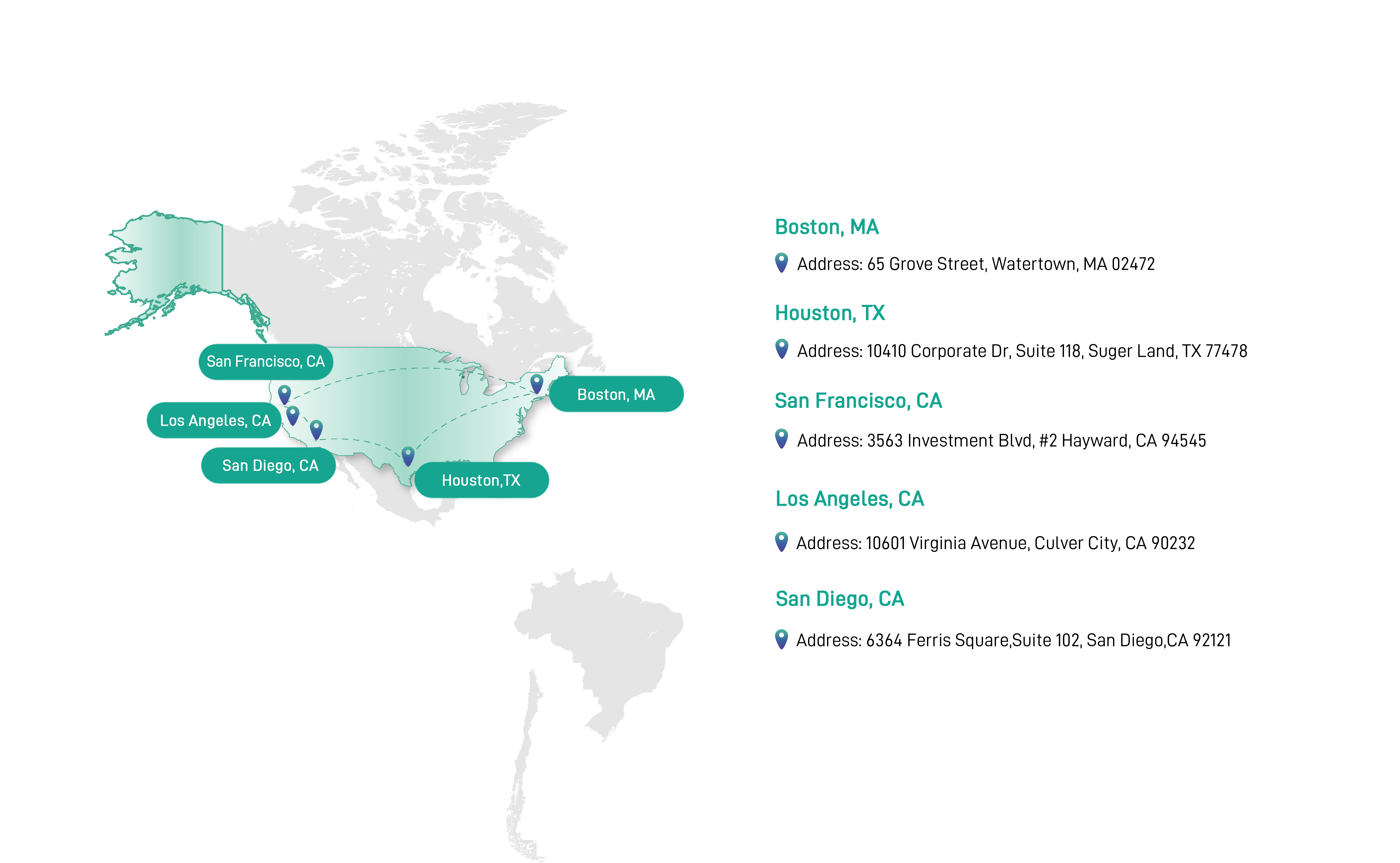
 3563 Investment Blvd, #2, Hayward, CA 94545sales.us@quintarabio.com1-617-789-611165 Grove St, Suite 102, Watertown, MA 02472sales.us@quintarabio.com1-617-789-611110410 Corporate Dr. Suite 118, Sugar Land, TX 77478
sales.us@quintarabio.com
1-424-549-091110601 Virginia Avenue, Culver City, CA 90232sales.us@quintarabio.com1-619-823-08956364 Ferris Square, Suite 102, San Diego, CA 92121Quintara Biosciences © 2025 All Rights Reserved | Site Map | Terms of Use | Privacy Policy


 Login
Login  Order
Order Contact Us
 Contact Us