We Go Fast,You Go Forward
July 13, 2026
Long gene synthesis has become a foundational technology in synthetic biology, protein engineering, gene therapy, vaccine development, and industrial biotechnology. While synthesizing short DNA fragments is now routine, constructing genes longer than 3 kb—and especially those exceeding 10 kb—still presents significant technical challenges.
Successful long gene synthesis requires more than simply ordering DNA. Researchers must carefully consider sequence design, assembly strategy, error management, and downstream validation to ensure project success.
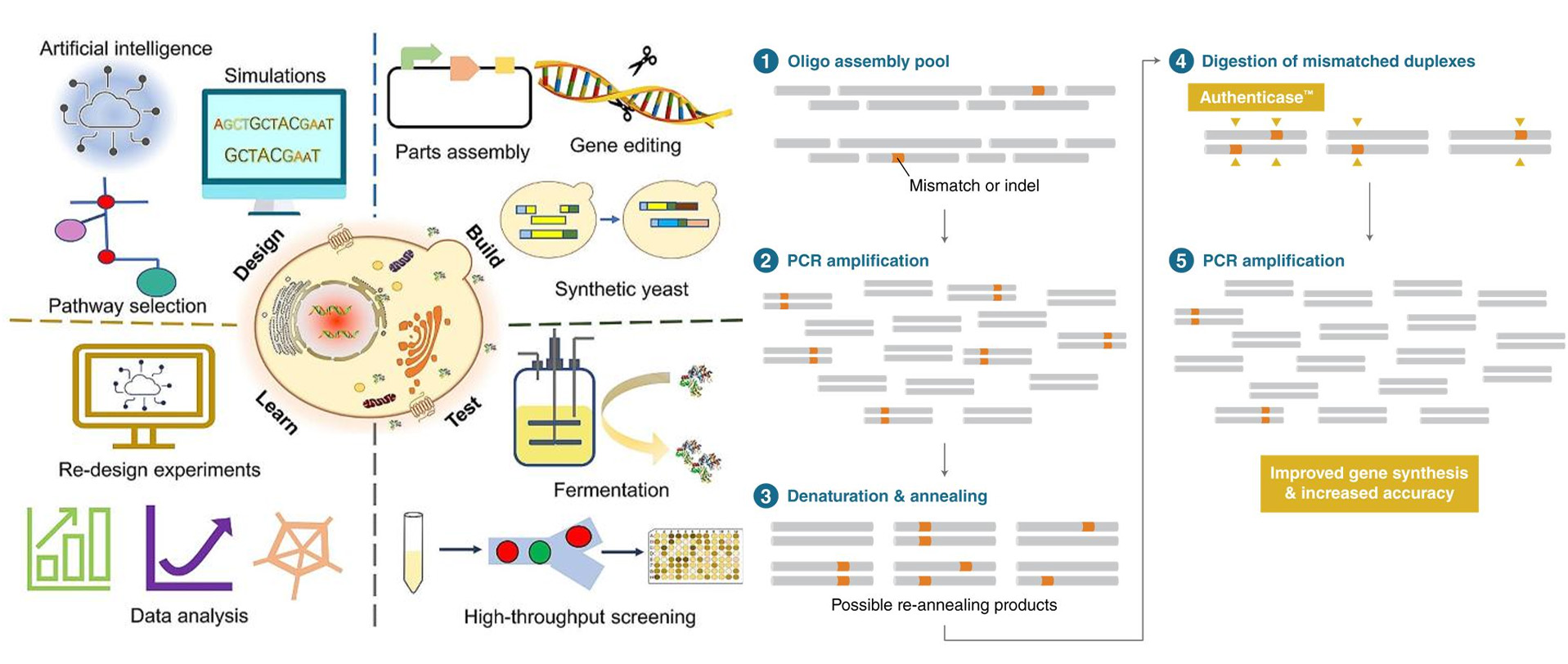
As gene length increases, synthesis complexity grows exponentially.
Common challenges include:
Repetitive sequences
Extreme GC-rich or AT-rich regions
Secondary structures
Homopolymer stretches
Large-scale assembly errors
Increased mutation rates
Reduced cloning efficiency
The relationship between gene length and project complexity can be summarized below:
Gene Length | Difficulty Level | Typical Challenges |
<3 kb | Low | Standard synthesis |
3–5 kb | Moderate | Assembly optimization |
5–10 kb | High | Error accumulation |
10–20 kb | Very High | Cloning and stability issues |
>20 kb | Extreme | Multi-stage assembly required |
Nearly half of synthesis failures originate from poor sequence design rather than manufacturing limitations.
Codon Optimization
For protein expression projects, optimize codons according to the host organism:
E. coli
CHO cells
HEK293 cells
Insect cells
Yeast
Benefits include
Improved expression
Reduced rare codons
Better translation efficiency
Eliminate Problematic Motifs
Avoid:
Long direct repeats
Inverted repeats
Strong hairpins
Cryptic splice sites
Internal terminators
Recombination hotspots
Optimal target:
Parameter | Recommended Range |
Average GC Content | 40–65% |
Local GC Variation | ±15% |
Homopolymer Length | <15 bp |
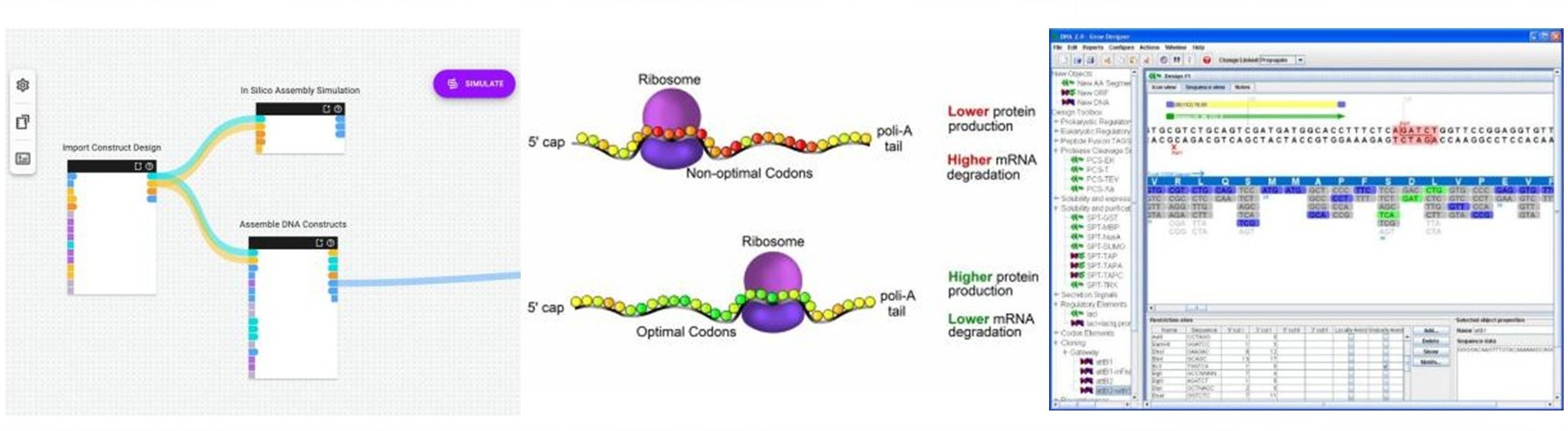
Strategic Pillar 2: Divide and Conquer Through Modular Assembly
Rather than synthesizing an entire long gene in one step, modern workflows use hierarchical assembly.
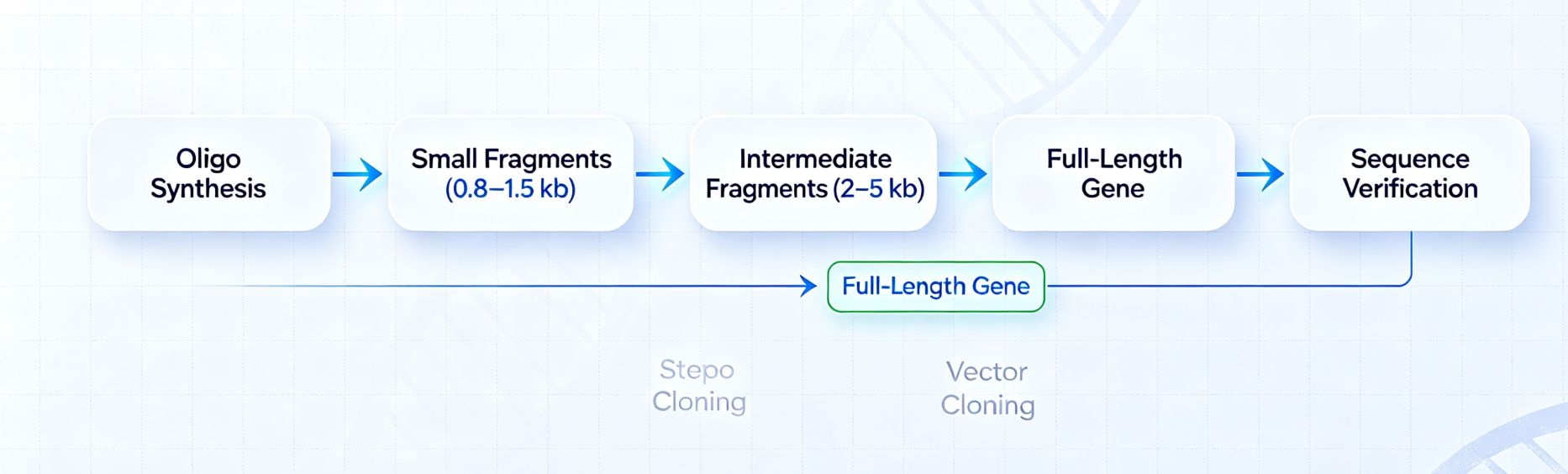
Higher assembly accuracy
Easier troubleshooting
Reduced project risk
Different assembly methods excel under different circumstances.
Method | Best For | Advantages | Limitations |
Gibson Assembly | 2–20 kb constructs | Seamless assembly | Requires overlap design |
Golden Gate Assembly | Modular constructs | High throughput | Restriction site constraints |
Yeast Assembly | >20 kb constructs | Large fragment handling | Additional host manipulation |
Homologous Recombination | Very large pathways | Flexible assembly | Lower efficiency |
Construct Size | Preferred Method |
1–5 kb | Gibson Assembly |
5–15 kb | Gibson + Hierarchical Assembly |
15–50 kb | Yeast Assembly |
>50 kb | Hybrid Multi-Step Assembly |
Error accumulation remains the primary challenge in long gene synthesis.
Oligonucleotide synthesis errors
PCR amplification errors
Assembly-induced mutations
Cloning artifacts
High-fidelity polymerases
Reduced PCR cycle numbers
Sequence-verified intermediate fragments
Clone screening before final assembly
Construct Length | Relative Error Risk |
1 kb | Low |
5 kb | Moderate |
10 kb | High |
20 kb | Very High |
Validation should occur throughout the synthesis process rather than only at the end.
Stage | Validation Method |
Fragment Assembly | Colony PCR |
Intermediate Assembly | Sanger Sequencing |
Full-Length Construct | NGS |
Large Constructs | Long-Read Sequencing |
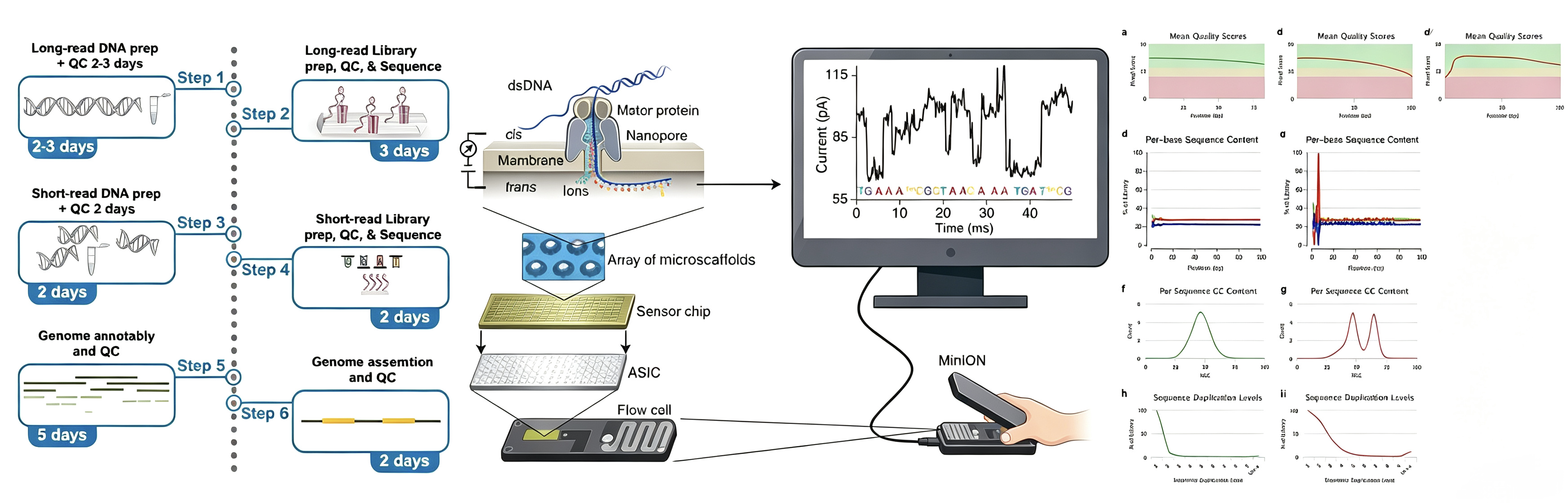
For constructs larger than 10 kb, nanopore long-read sequencing technologies provide significant advantages because they can verify the entire construct in a single read without assembly ambiguities.
Strategic Pillar 6: Design for Manufacturability
Many researchers focus solely on biological function while overlooking manufacturability.
Design Feature | Recommendation |
Direct Repeats | Minimize |
GC Extremes | Avoid |
Palindromic Regions | Reduce |
Secondary Structures | Optimize |
Toxic Genes | Use inducible systems |
Large Pathways | Modularize |
Designing for manufacturability can dramatically improve synthesis success rates and shorten turnaround times.
Phase | Objective | Key Actions |
Design | Optimize sequence | Codon optimization, motif removal |
Fragmentation | Simplify assembly | Divide into manageable blocks |
Assembly | Build construct | Gibson or hierarchical assembly |
QC | Detect errors | Sequencing verification |
Scale-Up | Final production | Clone expansion and storage |
Several innovations are transforming the field:
Machine learning algorithms can predict problematic regions before synthesis begins.
Emerging enzymatic approaches promise faster and more environmentally friendly DNA manufacturing.
Automated assembly platforms reduce human error and improve reproducibility.
Technologies such as Oxford Nanopore Technologies are enabling rapid validation of increasingly large synthetic constructs.
Long gene synthesis is no longer limited by DNA length alone. Success depends on implementing a comprehensive strategy that combines intelligent sequence design, modular assembly, rigorous quality control, and advanced sequencing validation.
By optimizing constructs for manufacturability, selecting appropriate assembly methods, and integrating sequencing checkpoints throughout the workflow, researchers can significantly increase success rates, reduce project timelines, and accelerate the development of next-generation synthetic biology applications.
Best Practice | Impact |
Optimize sequence design first | Reduces synthesis failures |
Use modular assembly | Improves scalability |
Select appropriate assembly technology | Enhances efficiency |
Verify intermediates | Prevents downstream rework |
Use Nanopore sequencing for large constructs | Improves validation accuracy |
Design for manufacturability | Accelerates project completion |

We Go Fast, You Go Forward
 sales.us@quintarabio.com
 1-617-789-6111
 3563 Investment Blvd, #2, Hayward, CA 94545sales.us@quintarabio.com1-617-789-611165 Grove St, Suite 102, Watertown, MA 02472sales.us@quintarabio.com1-617-789-611110410 Corporate Dr. Suite 118, Sugar Land, TX 77478
sales.us@quintarabio.com
1-424-549-091110601 Virginia Avenue, Culver City, CA 90232sales.us@quintarabio.com1-619-823-08956364 Ferris Square, Suite 102, San Diego, CA 92121Quintara Biosciences © 2025 All Rights Reserved | Site Map | Terms of Use | Privacy Policy


 Login
Login  Order
Order Contact Us
 Contact Us